
Blog Summary
Nutrition coaching is one of the highest-value services a personal trainer can offer, and one of the hardest to deliver consistently at scale. Manual meal planning takes hours per client. Generic templates produce generic results. AI nutrition software changes this equation by handling meal plan generation, macro tracking, and client logging automatically, freeing the trainer to focus on the coaching decisions that actually require their judgement. This guide covers what AI nutrition software actually does, which platforms deliver genuine value in 2026, what they cost, and how to choose the right one for your coaching business.
Introduction
Nutrition coaching has always been the service personal trainers know they should offer and consistently struggle to deliver well. Clients ask for nutrition guidance constantly. Trainers know that nutrition drives a significant share of client results. And yet building individualised meal plans, tracking macros across a full roster, and reviewing food logs every week is one of the most time-consuming parts of running a coaching business when done manually.
AI nutrition software addresses this by automating the parts of nutrition coaching that do not require a human judgement call: calculating macro targets from client data, generating meal plan structures that fit those targets, logging food intake through photo recognition or database search, and surfacing compliance trends so the trainer’s attention goes to clients who actually need a conversation rather than scanning every log manually.
This guide covers what to look for, which platforms deliver genuine value in 2026, and how nutrition coaching fits inside a broader coaching business that also includes training, accountability, and client communication.
What AI Nutrition Software Actually Does
The term AI nutrition software covers a range of capability, and understanding what the most useful version of this tool does helps trainers evaluate what any specific platform is genuinely offering.
-
Macro and Calorie Target Calculation
The foundational layer of any nutrition software is calculating appropriate calorie and macro targets based on a client’s body composition, activity level, and goal. AI-driven platforms do this automatically from intake data rather than requiring the trainer to run the calculation manually for every client, and adjust the targets as the client’s weight and activity change over time.
-
Meal Plan Generation
More advanced AI nutrition software generates structured meal plans that fit a client’s calculated targets, food preferences, allergies, and cooking ability. A trainer describing a client’s dietary restrictions and preferences in plain language and receiving a usable meal structure back in seconds removes a significant chunk of the manual planning work that nutrition coaching has traditionally required, similar to how creating workouts from text removes the equivalent manual work on the training side.
-
Photo and Database Food Logging
The biggest barrier to consistent nutrition tracking is the friction of logging food. AI-powered photo recognition, where a client photographs a meal and the software identifies and logs it automatically, removes much of this friction. Combined with a comprehensive food database for manual search, this is what determines whether clients actually log consistently enough for the data to be useful.
-
Compliance and Trend Surfacing
The most valuable capability for a trainer managing a full roster is software that surfaces which clients are off target, which are trending in the wrong direction, and which need a conversation, rather than requiring the trainer to open every client’s food log individually. This is what makes nutrition coaching operationally viable across 20, 30, or 40 clients rather than just a handful.
The Best AI Nutrition Software for Personal Trainers in 2026
1. Trainerfu
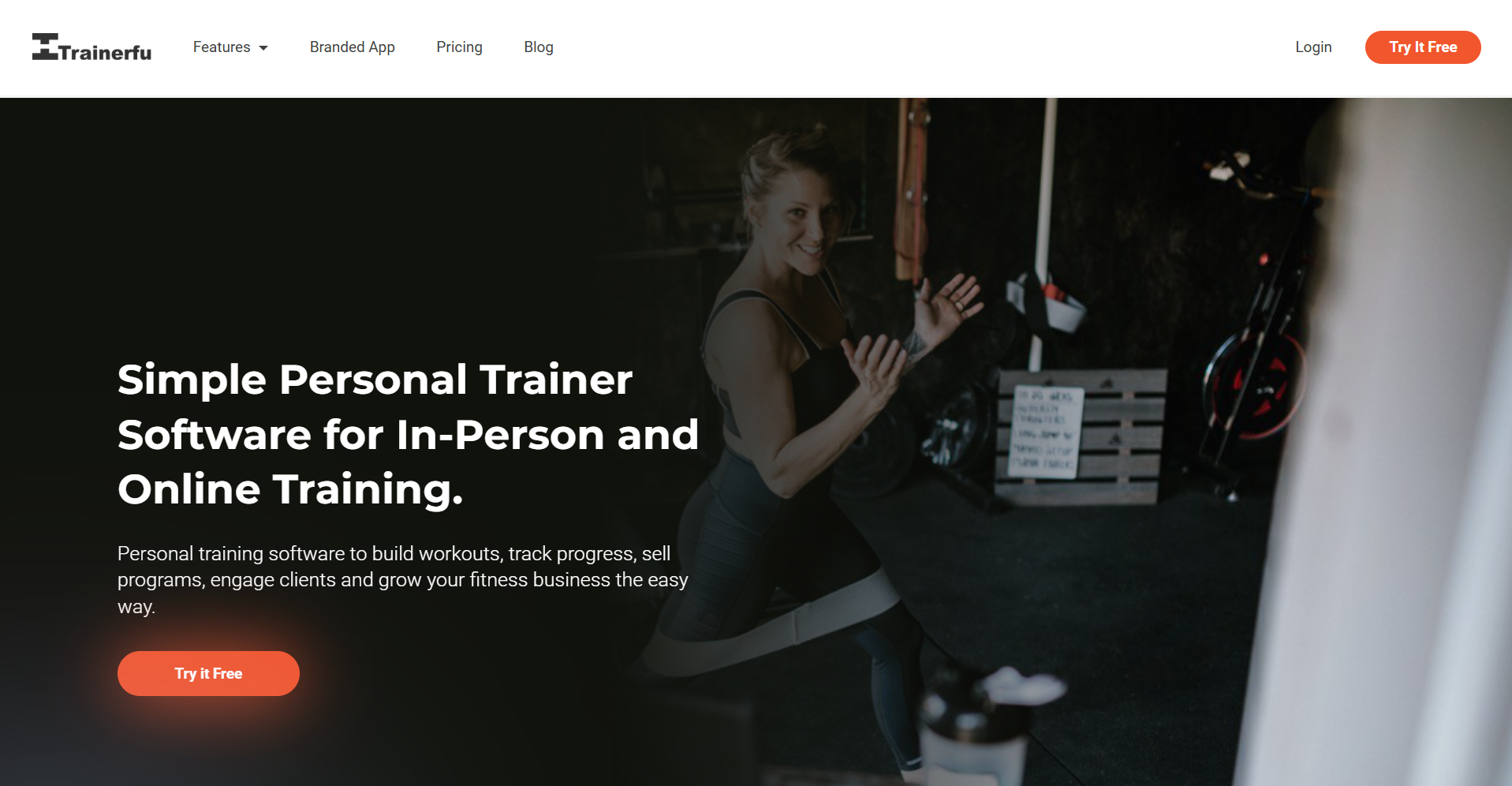
Trainerfu’s nutrition coaching is built into the base platform rather than sold as a separate add-on. Nutrition data connects to the broader coaching picture rather than sitting in an isolated nutrition tab, so a client who has been consistently under-eating relative to their training load is flagged as part of the same system that tracks their workout performance and personalised workout plan. This means the trainer sees the full picture of why a client might be underperforming in their sessions rather than two disconnected data sets.
The platform also supports creating automated messages around nutrition adherence, so a client who has missed several days of logging or is trending off target gets a prompt automatically rather than the trainer needing to notice and follow up manually.
Best for: Trainers who want nutrition coaching integrated with workout programming, habit tracking, and client communication in one platform rather than managing nutrition as a separate system.
2. MyFitnessPal
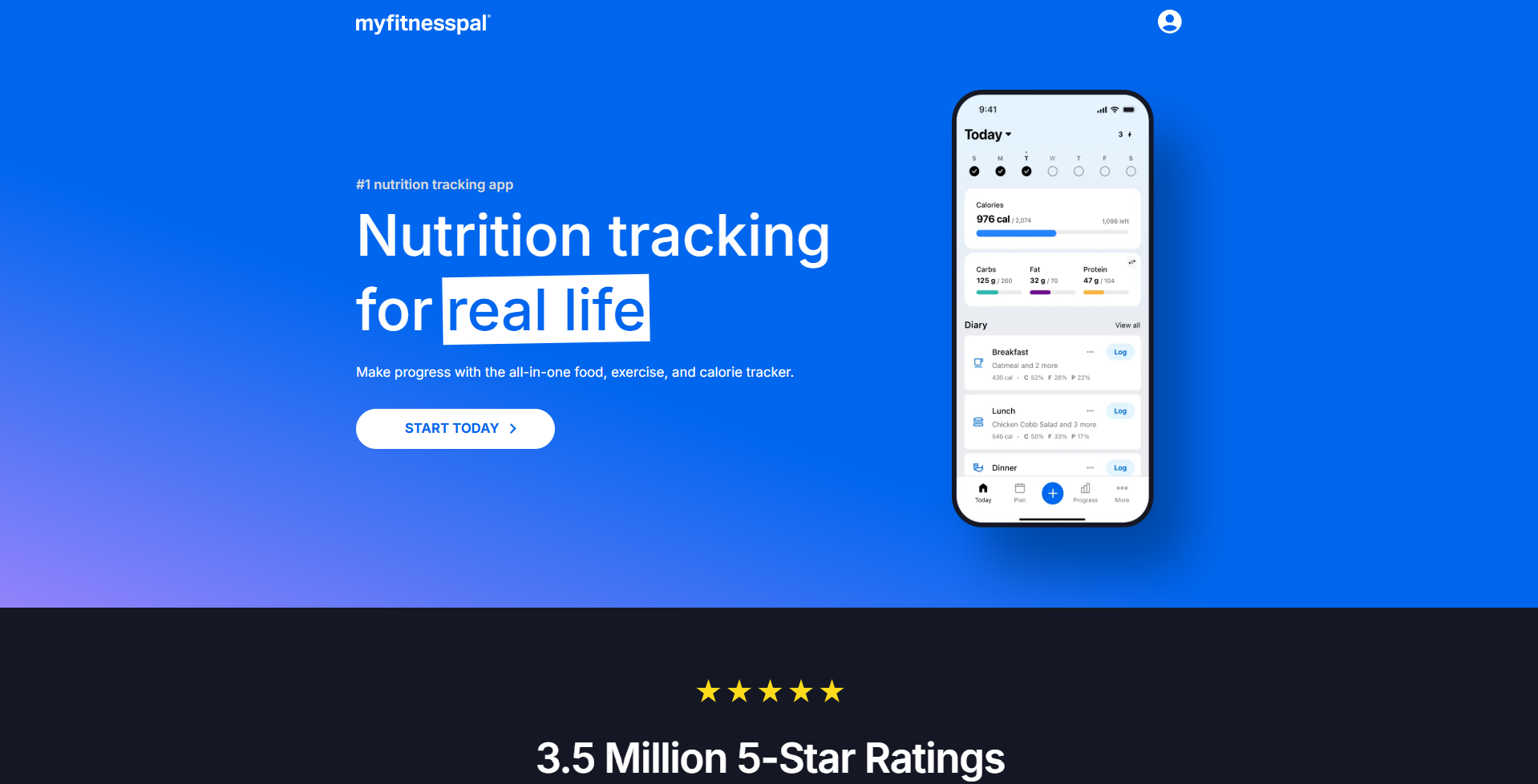
MyFitnessPal remains the most comprehensive food database available, with millions of logged foods, barcode scanning, and a large enough user base that most packaged and restaurant foods are already in the system. Most coaching platforms integrate with MyFitnessPal directly rather than competing with it, because building an equivalent food database from scratch is not a realistic undertaking for a coaching-focused platform.
MyFitnessPal’s own AI features are improving but remain consumer-focused. It is not built as a coach-to-client delivery platform, which means it works best as the data layer underneath a coaching platform rather than as a standalone nutrition coaching tool for trainers.
Best for: The food logging and database layer underneath any coaching platform, used in combination with software built for trainer-to-client delivery.
3. MyPTHub
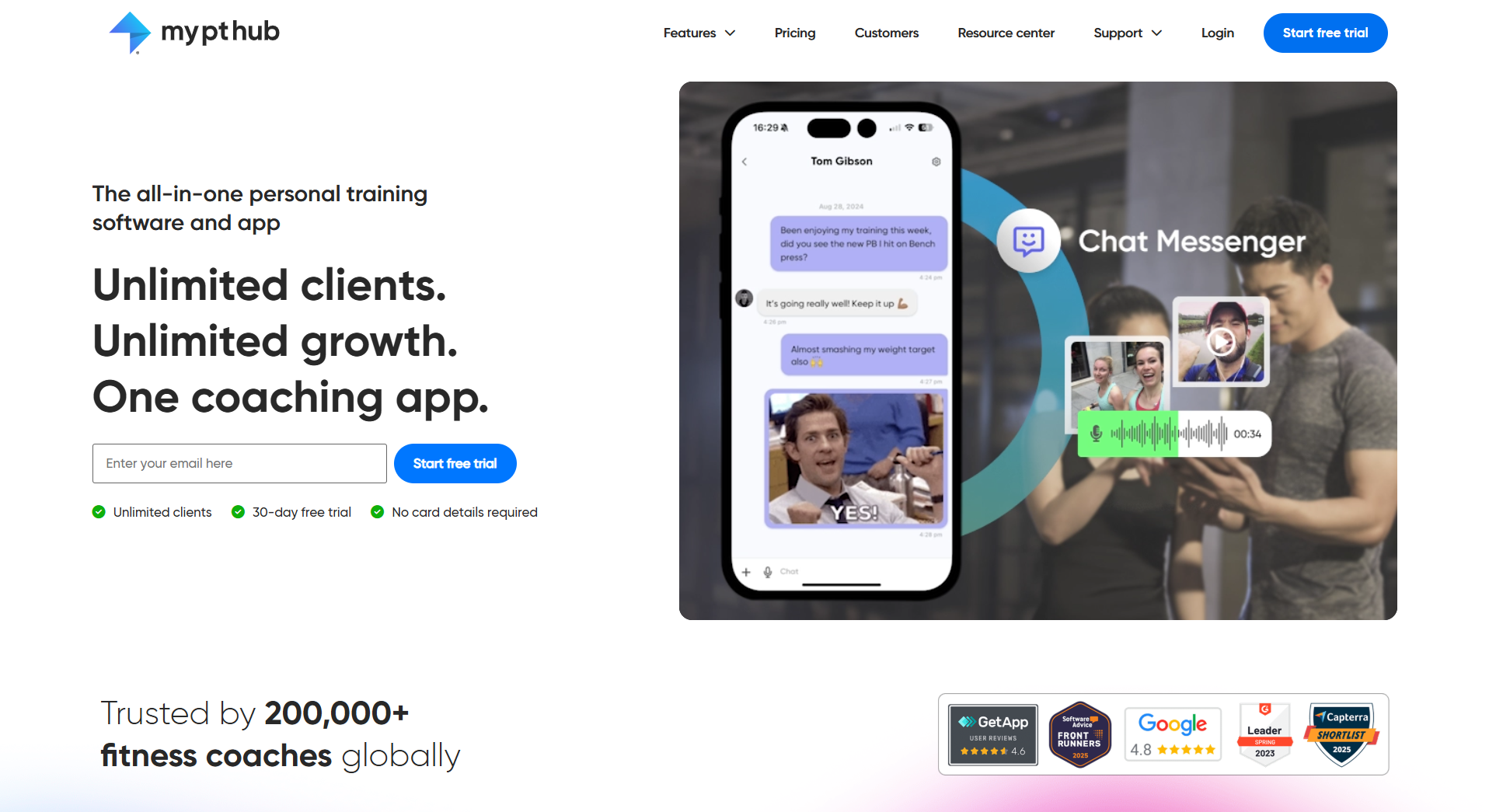
MyPTHub includes nutrition coaching as part of its broader feature set, positioned as one piece of an all-in-one coaching suite rather than a specialised nutrition product. This suits trainers who want nutrition, workout programming, and business management consolidated under one subscription.
Best for: Trainers who want nutrition coaching as part of a broader all-in-one platform rather than evaluating nutrition tools separately from workout and business management features.
4. ABC Trainerize
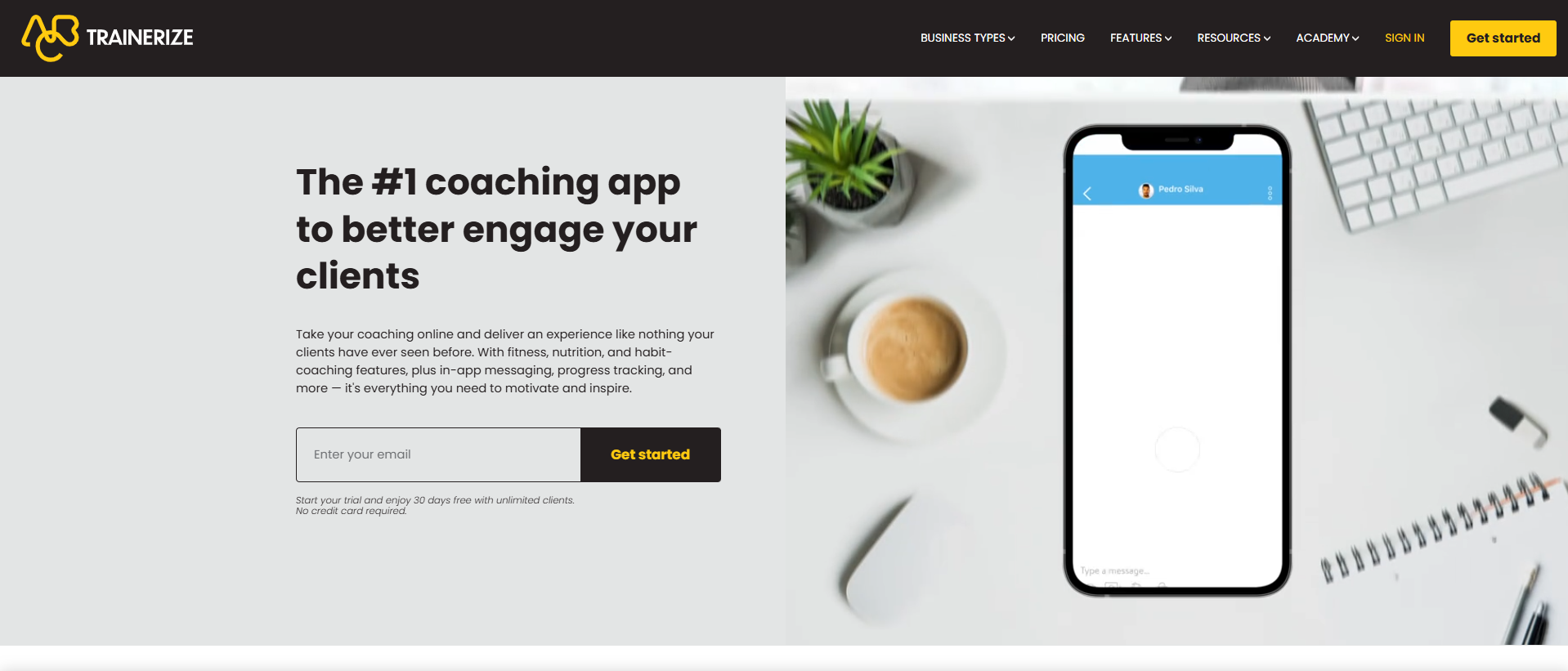
Trainerize offers basic nutrition tracking on its paid plans, with more advanced AI-generated meal plans available through a paid add-on costing $20 to $45 per month depending on plan tier. A trainer who wants full AI-driven meal plan generation on Trainerize needs to budget for the add-on on top of the base subscription, which changes the effective cost comparison against platforms that include this capability natively.
Best for: Trainers already using Trainerize for workout delivery who want to add nutrition capability within the same ecosystem and are comfortable with the additional add-on cost.
5. Cronometer
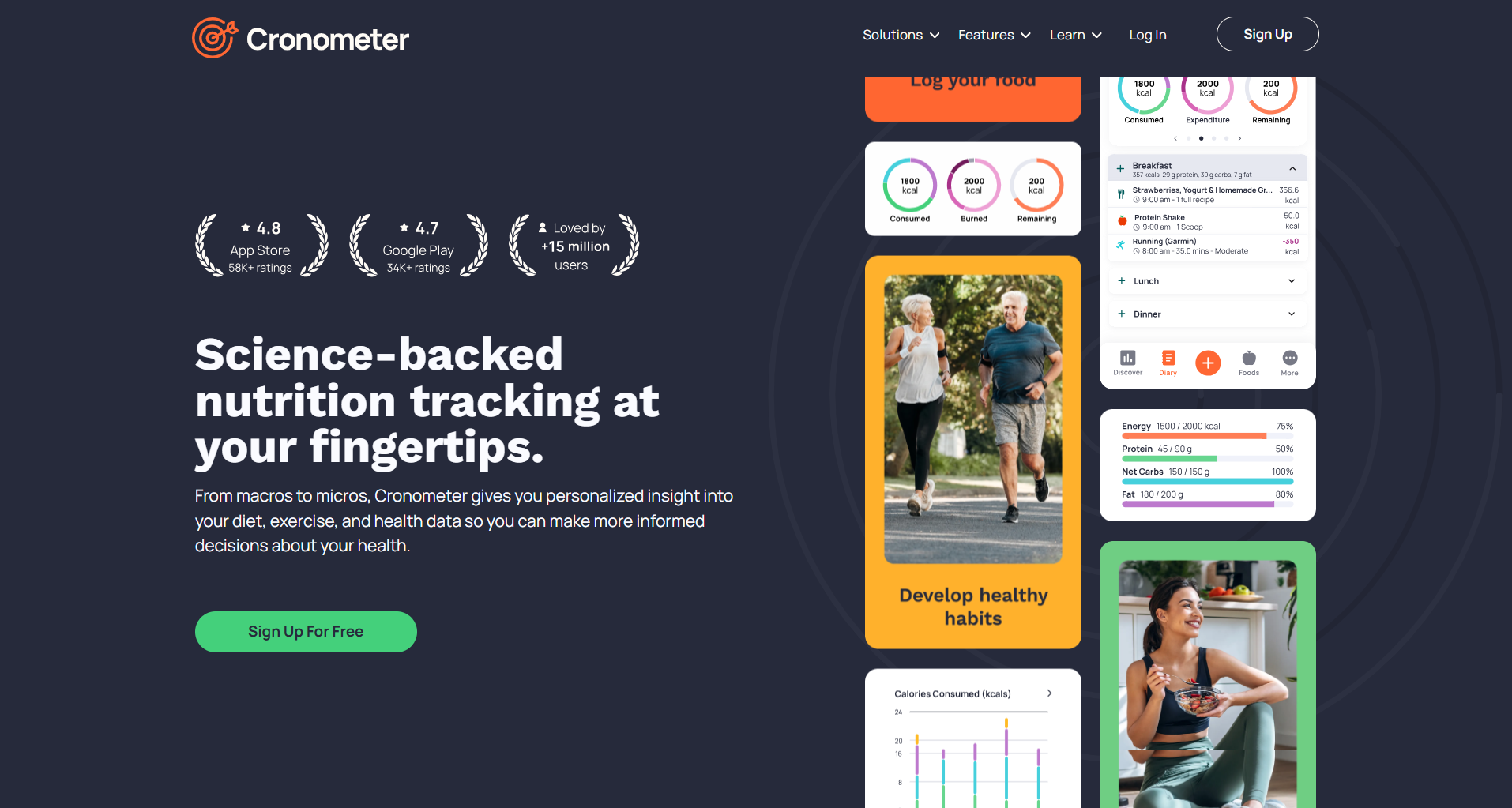
Cronometer is a nutrition tracking app known for its depth on micronutrient tracking, not just calories and macros. For trainers working with clients who have specific health conditions where micronutrient intake matters, such as iron deficiency or vitamin D insufficiency, Cronometer’s data depth exceeds what most coaching-focused nutrition tools provide.
It is a consumer logging app rather than a coach-to-client delivery platform, so it works best as a specialist tool for specific client situations rather than a primary nutrition coaching system for a full roster.
Best for: Specific clients with micronutrient tracking needs, used alongside a primary coaching platform rather than as the main nutrition system.
What Separates Genuine AI Nutrition Coaching From Basic Food Logging
Many platforms marketed as AI nutrition software are, on closer inspection, food logging tools with a calculator attached. The distinction matters because it determines how much of the actual coaching work the software is removing from the trainer’s week.
-
Does It Calculate Targets Automatically or Require Manual Input?
Basic nutrition tools require the trainer to calculate and manually enter calorie and macro targets for every client. Genuine AI nutrition software calculates these automatically from client data and adjusts them as the client’s weight, activity, and goals change, without the trainer needing to run the numbers again each time.
-
Does It Generate Meal Structures or Just Track What Is Logged?
Tracking tools show what a client ate. Generation tools build what a client should eat based on their targets and preferences. The more valuable capability for a trainer’s time is the latter, because writing meal plan structures manually for every client is one of the most time-consuming parts of nutrition coaching when done by hand.
-
Does Nutrition Data Connect to the Rest of the Client Picture?
The most useful AI nutrition software does not treat nutrition as an isolated category. A client’s eating patterns affect their training capacity, recovery, and results, and a platform that connects nutrition data to workout performance and habit tracking gives the trainer a genuinely complete picture rather than three separate dashboards to check independently.
-
Does It Surface Who Needs Attention or Require Manual Review of Every Log?
For a trainer with a full roster, the time-saving value of AI nutrition software comes from not having to open every client’s food log individually to check compliance. Software that creates automated messages and flags clients who are significantly off target or trending in the wrong direction converts a roster-wide manual review into a short, targeted list.
What AI Nutrition Software Costs in 2026
Pricing for AI nutrition software varies significantly depending on whether it is sold standalone, as an add-on, or bundled into a broader coaching platform.
Standalone consumer nutrition apps typically range from free with limited features to $20 to $30 per month for premium tiers, but these are built for individual users logging their own food rather than for a trainer managing a roster of clients.
Coaching platforms that bundle nutrition tools into a broader subscription vary based on whether the AI-driven features are included or sold as an add-on. Platforms that charge separately for advanced meal planning typically add $20 to $45 per month on top of the base subscription. Platforms that include AI-driven nutrition coaching natively in their base plans avoid this additional line item entirely.
When comparing total cost, the question to ask is not just what the base subscription costs, but what it costs to get the specific nutrition capability your coaching model actually requires once any add-ons are factored in.
How to Choose the Right AI Nutrition Software for Your Coaching Model
-
If Nutrition Is Core to Your Coaching Offer
Trainers whose coaching model is built around nutrition as a primary service, not just a supplementary add-on, need software where nutrition data connects directly to the rest of the client relationship rather than a standalone nutrition app used alongside a separate training platform.
-
If Nutrition Is a Supplementary Service
Trainers who primarily coach training programmes and offer nutrition guidance as a lighter supplementary service may find that the nutrition tools included in their existing coaching platform’s base plan are sufficient, without needing a specialised paid add-on.
-
If You Are Working With Clients Who Have Specific Medical or Dietary Needs
For clients managing specific health conditions where detailed micronutrient tracking matters, a specialist tool used alongside the primary coaching platform may be the right combination, rather than expecting a general coaching platform’s nutrition tools to cover this level of clinical detail.
-
If You Are Just Adding Nutrition Coaching for the First Time
Start with whatever nutrition capability is already included in your existing coaching platform before purchasing a separate tool. Many trainers underuse the nutrition features they are already paying for before assuming they need to add another subscription.
-
If You Want to Turn Nutrition Coaching Into a Standalone Offer
Trainers who want to package nutrition coaching as its own product, separate from one-to-one training, benefit from a platform that supports building a landing page for the offer directly, so a nutrition-only programme can be marketed and sold without needing a separate website tool.
Final Thoughts
AI nutrition software does the calculation, generation, and tracking work that used to consume hours of a trainer’s week, freeing that time for the conversations and judgement calls that actually require a human coach. The platforms that deliver the most value in 2026 are not necessarily the ones with the most features. They are the ones where nutrition data connects meaningfully to the rest of the client relationship rather than sitting in an isolated tracking tool.
The right choice depends on how central nutrition is to your coaching model, how much of your existing platform’s nutrition capability you are already using, and whether your clients have specific dietary needs that require specialist tools alongside your primary coaching software.
Trainerfu is built around nutrition coaching as one connected piece of a complete coaching system rather than a separate product. The 14-day free trial is the most direct way to see what it looks like for your specific coaching practice. No credit card required.
Transparency note: This guide is published by Trainerfu, an AI coaching platform for personal trainers. We have aimed to give an honest comparison of the category before covering how Trainerfu fits within it.
Frequently Asked Questions
What is the best AI nutrition software for personal trainers in 2026?
The best choice depends on how central nutrition is to your coaching model. Trainerfu is a strong option for trainers who want nutrition coaching connected to workout programming, habit tracking, and client communication in one platform. MyFitnessPal remains the strongest food database and logging layer, used underneath most coaching platforms rather than as a standalone trainer tool. Trainers already on Trainerize can add nutrition capability through a paid add-on, though this comes at additional cost.
Is AI nutrition software accurate enough to replace a registered dietitian?
No. AI nutrition software calculates targets and generates meal structures based on established nutritional formulas and client data, which is appropriate for general fitness and body composition goals. It is not a substitute for a registered dietitian when a client has a diagnosed medical condition, an eating disorder history, or a clinical nutrition need that requires professional dietetic oversight. Personal trainers should refer clients with these needs to a qualified dietitian rather than relying on software to manage clinical nutrition decisions.
How much does AI nutrition software cost for a personal trainer?
Costs vary depending on whether nutrition tools are bundled into a coaching platform or purchased as an add-on. Platforms that include AI-driven nutrition coaching in their base plans avoid additional cost beyond the core subscription. Platforms that sell advanced meal planning as an add-on typically charge an additional $20 to $45 per month on top of the base subscription. Standalone consumer nutrition apps range from free to $30 per month but are not built for trainer-to-client delivery.
Does AI nutrition software work for clients with food allergies or dietary restrictions?
Yes, when the software allows the trainer to input specific restrictions and preferences as part of the client profile. Genuine AI-driven meal plan generation accounts for allergies, intolerances, and dietary preferences such as vegetarian or vegan when building meal structures. The accuracy of this depends on the trainer entering complete and correct information into the client profile, since the software can only account for restrictions it has been told about.
Can AI nutrition software help with client retention?
Yes, indirectly. Clients who feel their nutrition is being actively monitored, rather than discussed once at intake and never followed up on, are more likely to feel that their coaching is comprehensive and worth continuing. Automated messages that follow up when logging lapses, combined with nutrition data that connects to workout performance, give the trainer more to discuss in check-ins, which strengthens the coaching relationship rather than limiting it to training-only conversations.
What should I look for when choosing AI nutrition software as a personal trainer?
Five things matter most: whether calorie and macro targets are calculated automatically rather than requiring manual input, whether the software generates meal plan structures or only tracks what is logged, whether nutrition data connects to workout and habit data rather than sitting in an isolated dashboard, whether the platform creates automated messages and surfaces clients who need attention rather than requiring a manual review of every log, and what the total cost is once any add-ons required for full functionality are included.