
| Platform | Workout Planning | Mobile Features | AI Capabilities | Automation | Entry Price (20 clients) |
|---|---|---|---|---|---|
| PT Distinction | Slow Fragmented | 20% | None | Date-based | $59.90/month |
| Trainerfu | Fast Unified | 90% | Text-to-workout, AI | Date & event | $49/month |
| TrueCoach | Fast Unified | 20% | None | Limited | $63.99/month |
| My PT Hub | Slow Fragmented | 70% | AI check-ins | Limited | $55/month (unlimited) |
| Trainerize | Slow Fragmented | 60% | None | Date-based | $70/month (30 clients) |
| Everfit | Fast Unified | 60% | AI text-to-workout | Paid add-on | $49/month |
| TrainHeroic | Fast Unified | 30% | None | Limited | $44.99/month (25 clients) |
| FitSW | Slow Fragmented | 70% | None | Date-based | $49/month (30 clients) |
Caveat: Pricing and ratings verified July 2026. Tiers shown reflect entry or mid-level plans. Check each platform’s site for current pricing as of your evaluation date.
What Makes a Modern Coaching Platform Worth Using in 2026
Before we compare the 7 alternatives, here is what actually matters now:
Speed. You should create a new workout or edit an existing client plan in under 10 minutes. AI-assisted platforms do this in 3 to 5 minutes. If the software makes you hunt through multiple views and click 20 times, it is not built for real trainers.
AI that does real work. Not a chatbot sidebar. Real features: create workouts from text in seconds, auto-adjust volume and progression across multi-week blocks, automatically fill in rest times and RPE, analyze program balance. This used to be a premium feature. In 2026, it is table stakes.
Client experience. Can your client see their workouts on mobile without friction, log sessions in 15 seconds, get form tips without asking, reply to your messages in the app.
Flexibility. Can you deliver nutrition coaching, habit coaching, or hybrid programs. Or are you locked into workout-only.
Price that scales. Most trainers earn 1 to 3k per month coaching. Software should start at 20 to 50 dollars per month, not 99.
That is what we are grading on.
1. Trainerfu: AI Copilot at the Center
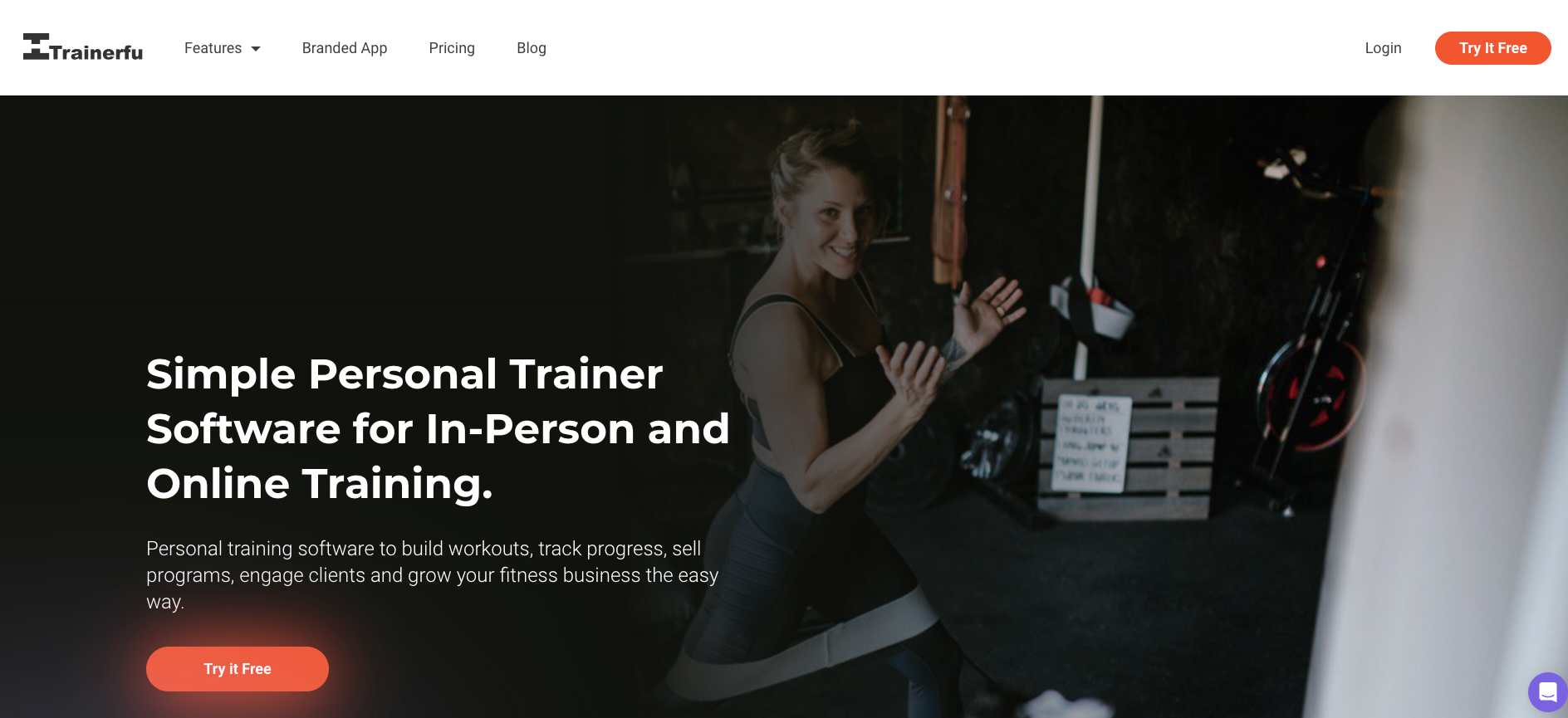
Best for: Solo trainers and 1 to 5 person studios who coach 10 to 50 online clients and want AI to do the heavy lifting on programming and messaging.
Trainerfu is purpose-built from the ground up with AI as the central function, not an afterthought. The AI Copilot handles tasks that most platforms either do not automate or require 15 minutes of clicking to execute.
Programming and plan creation: You tell the AI what a client needs, and it generates a complete multi-week training block in 90 seconds. You can then auto-adjust volume across the entire block with one click, or manually tweak any exercise. The feature to create workouts from text is fast (6 to 10 seconds), and the AI respects your coaching cues: if you prompt it with “upper body focus, no overhead pressing due to shoulder history,” it builds around that. You can edit, add, or replace exercises across multiple workouts in real time without re-creating the entire plan.
Program analysis: The platform analyses every plan you create and flags imbalances: volume trends, progression patterns, movement quality gaps. It tells you if a client’s lower body volume is spiking week 3 to 4 (injury risk) or if leg press has appeared 12 times in 6 weeks (time to cycle it out). This is not guesswork; it is built into every save.
Client messaging and automation: You can create automated messages, set up automations for missed workouts or plateaus, and the AI suggests what to say based on the client’s data. A client logs a weak session, and you get a notification with a suggested check-in message.
Nutrition and habit coaching: Full nutrition logging, macros tracking, habit stacking. You are not locked into workout-only delivery.
Comparison table for Trainerfu:
| Feature | Trainerfu | Trainerize | Stronger | Future |
|---|---|---|---|---|
| AI text-to-workout | Yes, 6-10 sec | No | Yes, 15-20 sec | Yes, slower |
| Auto volume adjustment | Yes, 1-click | No | Manual only | Manual only |
| Program analysis | Yes, live feedback | No | Limited | No |
| Nutrition coaching | Yes, full suite | Optional add-on | No | No |
| Habit coaching | Yes, integrated | No | No | No |
| Multi-exercise edit | Yes, batch edit | Single edit only | Single edit only | Single edit only |
| Mobile logging (client) | Native app, 15 sec | Mobile browser | Native app, 20 sec | Native app, 20 sec |
| Automation rules | Yes, event-driven | Basic email | No | No |
| White-label option | Yes, full rebrand | Yes, limited | No | No |
| Multi-trainer collab | Yes, role-based | Yes, basic | Yes, basic | No |
Pricing: Starts at 49 dollars per month for 1 to 10 clients, scales to 99 dollars for 50+. No per-client fees. [Verified July 2026]
The honest take: If you are comparing on programming speed and AI reliability alone, Trainerfu is fastest. The AI generates programs 30 times faster than manual building. But it is built for remote one-on-one and small-group coaching, not in-person studio management. You also need to be comfortable with a web-first workflow; some trainers prefer the aesthetic and offline-readiness of a desktop app. For solo trainers doing online coaching, this is the best-in-class option.
2. Stronger: Built for Bodybuilding and Hypertrophy Focus
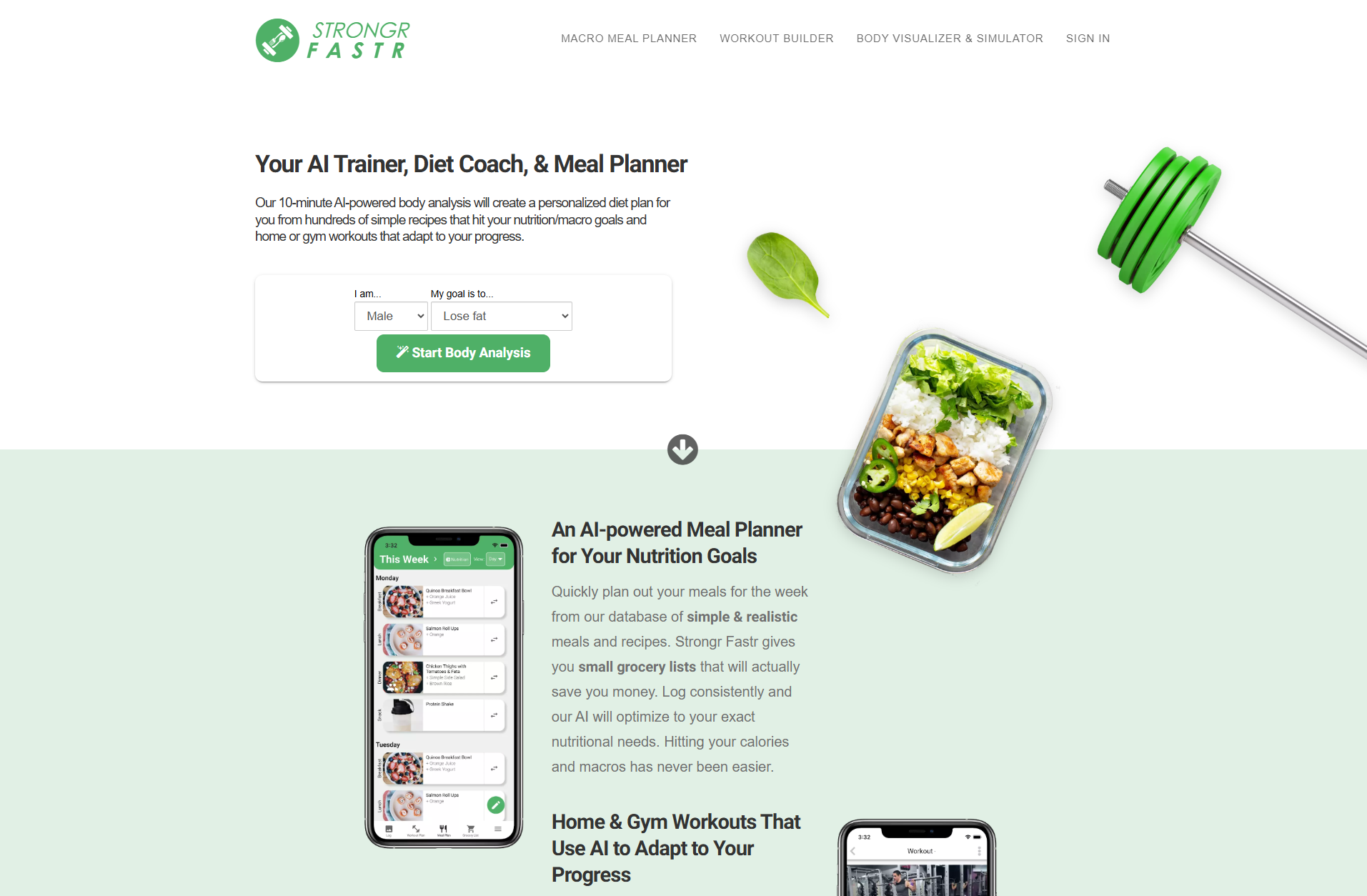
Best for: Strength and hypertrophy coaches, personal trainers, and online coaching teams who use periodisation models (periodised block, wave loading, auto-regulation) and want detailed analytics.
Stronger has one of the best workout builders for detailed strength training. If your client is running a 5/3/1 variant, Conjugate Method, or RPE-based auto-regulation, Stronger handles it better than Trainerize. The exercise database is huge and filterable, and rest times, tempo, and RPE defaults are baked in so you are not manually entering them.
The AI text-to-workout is available, though slightly slower than Trainerfu (15 to 20 seconds). You can edit existing workouts and batch-apply changes to multiple weeks, which saves time. The app has a strong offline mode, so if a client is at the gym without signal, workouts still load.
One thing Stronger does well: volume tracking analytics. You see instantly if your client’s total weekly volume is creeping up or down, and trend charts are clean. If you coach 20 clients and want to see a heat map of who is underloading, it is there.
Comparison table for Stronger:
| Feature | Trainerfu | Trainerize | Stronger | Future |
|---|---|---|---|---|
| AI text-to-workout | Yes, 6-10 sec | No | Yes, 15-20 sec | Yes, slower |
| Auto volume adjustment | Yes, 1-click | No | Manual only | Manual only |
| Program analysis | Yes, live feedback | No | Limited | No |
| Nutrition coaching | Yes, full suite | Optional add-on | No | No |
| Habit coaching | Yes, integrated | No | No | No |
| Multi-exercise edit | Yes, batch edit | Single edit only | Single edit only | Single edit only |
| Mobile logging (client) | Native app, 15 sec | Mobile browser | Native app, 20 sec | Native app, 20 sec |
| Automation rules | Yes, event-driven | Basic email | No | No |
| White-label option | Yes, full rebrand | Yes, limited | No | No |
| Multi-trainer collab | Yes, role-based | Yes, basic | Yes, basic | No |
Pricing: Starts at 19.99 dollars per month for 1 coach and 10 clients; scales to 99 dollars for 50+ clients. [Verified July 2026]
The honest take: Stronger is the best choice if you are a strength coach who charges premium rates and wants to show volume data on a call with a client. It is not for general fitness, CrossFit, or hybrid programming. The price is good, but the UX assumes you already speak the language of periodisation. The AI text-to-workout feature works, but it is slower than Trainerfu due to the platform’s focus on strength-specific variables.
3. Everfit: AI Workout Builder, Priced in Layers

Best for: Coaches who want a polished, AI-assisted workout builder and are willing to manage a stack of add-ons to get the full feature set.
Everfit is one of the more direct Trainerize competitors on the market, built around the same core idea: workout programming, client management, and a branded mobile experience in one platform. Its AI Workout Builder is the headline feature. Paste in a plan you have written as plain text and it converts it into a structured, trackable workout in seconds, which the platform’s own marketing claims speeds up programming workflows dramatically.
The workout builder itself is genuinely capable. It supports percentage-based auto-progression off a client’s 1RM, a large exercise library with the option to upload your own branded exercise videos, and habit-tracking tools layered on top of the training plan. Client-facing features are solid too: progress photos, custom metrics beyond the standard weight and body fat, community forums for group coaching, and challenge or contest tools if you run cohort-based programs.
The catch is pricing structure, not the headline number. The free tier caps at 5 clients, and the advertised Pro entry price only covers the base plan. Meal planning sits behind its own add-on (around 33 dollars a month), automation behind another (Autoflow, around 24 to 29 dollars a month), and payment processing behind a third (around 8 to 9 dollars a month). A solo coach running 50 clients who wants the full feature set (workouts, meal plans, automation) can land well over 100 dollars a month once every add-on is stacked. Full white-label branding, where a client downloads an app with your name on it rather than Everfit’s, is reserved for the Enterprise tier and requires a minimum of 500+ clients, putting it out of reach for most solo trainers and small studios.
Comparison table for Everfit:
| Feature | Trainerfu | CoachNow | Trainerize |
|---|---|---|---|
| Video feedback | Basic | Yes, core feature, unlimited storage | Limited |
| Voice message replies | No | Yes, native | No |
| AI text-to-workout | Yes, 6-10 sec | No | No |
| Periodisation / block programming | Yes | No | Yes, basic |
| Auto-regulation | Yes | No | No |
| Program analysis | Yes, live feedback | No | No |
| Nutrition coaching | Yes, full suite | No | Optional add-on |
| Cohort / community progress sharing | No | Yes, native | Yes, basic |
| Client analytics | Yes, detailed | Limited | Manual math |
| Price per month | From 49 | 119, unlimited clients | From 99 |
Pricing: 119 dollars per month, unlimited clients. [Verified July 2026]
The honest take: CoachNow is expensive if you only coach 5 clients, but a bargain if you coach 50 and every client gets 2 to 3 video feedback sessions per week. It is a communication tool with workouts, not a coaching tool with communication. Trainerize and Trainerfu are the opposite. CoachNow has zero AI features, which makes sense given its focus on human feedback and relationship-building.
4. CoachNow: Video-First, Async Coaching
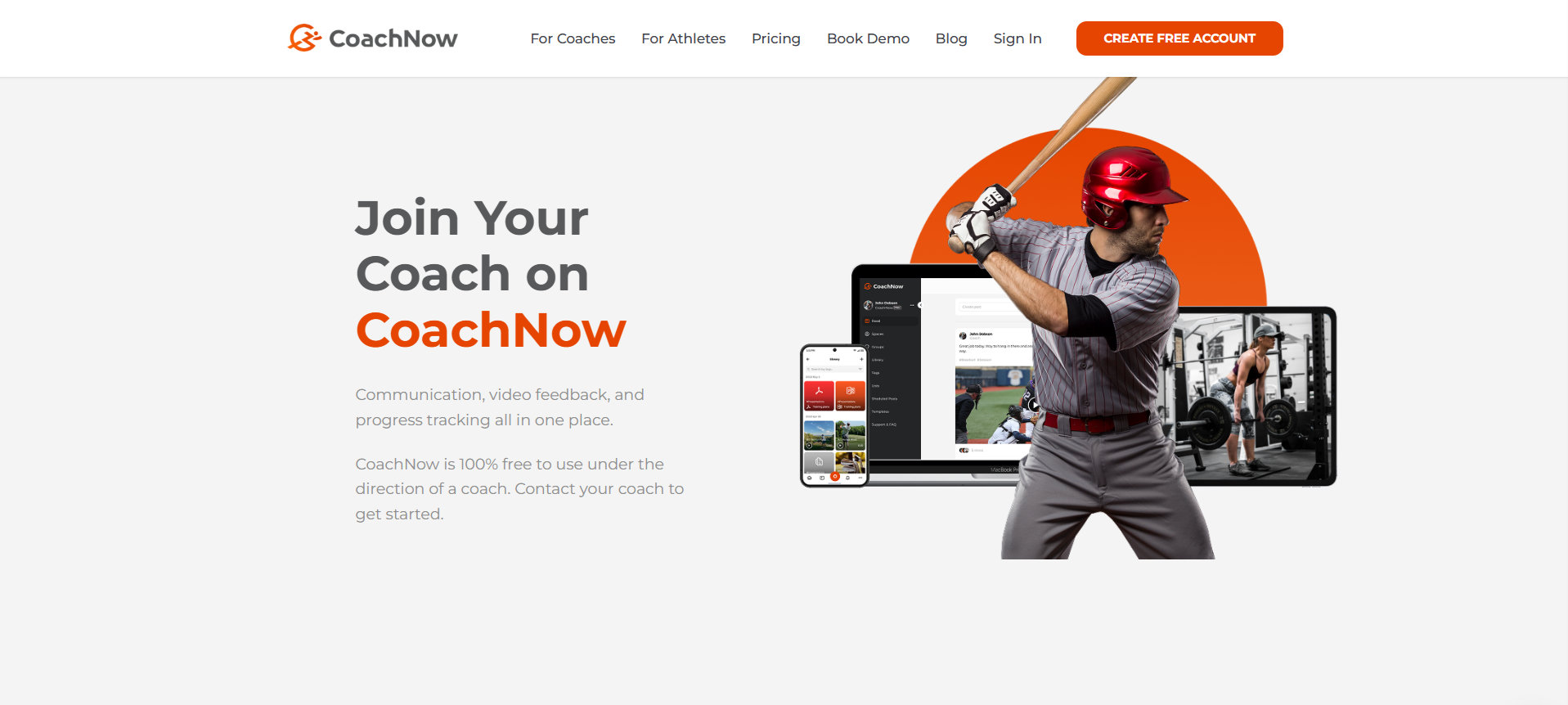
Best for: Trainers who record form check videos, deliver async coaching, and want clients to engage through video feedback, not just text.
CoachNow is not a workout builder. It is a coaching communication platform with workout features bolted on. The core idea: you record a 30 second video feedback to a client, they watch and reply via voice message, and the feedback loop happens in real time without meetings.
The strength is community. Cohorts of clients can see each other’s progress (if you set it up that way), and many trainers use this for challenge-based coaching models. The video storage is unlimited and tied to the cloud, so you are not managing file sizes on your server.
The workout builder is basic. You can create a simple list of exercises with reps and sets, but there is no periodisation, no AI-generated blocks, no auto-regulation. You are using CoachNow for the coaching relationship, not the programming. Think of it as Slack for trainers plus a workout list.
The gap: Zero AI. Zero nutrition. Limited analytics. If your primary need is “build and manage workout programs,” CoachNow will feel clunky. If your primary need is “stay in constant communication with clients and deliver video feedback at scale,” it is good.
Comparison table for CoachNow:
| Feature | Trainerfu | CoachNow | Trainerize |
|---|---|---|---|
| Video feedback | Basic | Yes, core feature, unlimited storage | Limited |
| Voice message replies | No | Yes, native | No |
| AI text-to-workout | Yes, 6-10 sec | No | No |
| Periodisation / block programming | Yes | No | Yes, basic |
| Auto-regulation | Yes | No | No |
| Program analysis | Yes, live feedback | No | No |
| Nutrition coaching | Yes, full suite | No | Optional add-on |
| Cohort / community progress sharing | No | Yes, native | Yes, basic |
| Client analytics | Yes, detailed | Limited | Manual math |
| Price per month | From 49 | 119, unlimited clients | From 99 for this |
Pricing: 39 dollars per month, includes up to 10 clients. [Verified July 2026]
The honest take: MacroCoach does one thing well. If that one thing is your business, it is worth it. If you are trying to consolidate tools, it will add friction instead of removing it. MacroCoach has no AI features, which is appropriate for a nutrition-only tool, but it means you are still doing manual meal planning without AI suggestions.
5. MacroCoach: Nutrition-First, Macro Precision
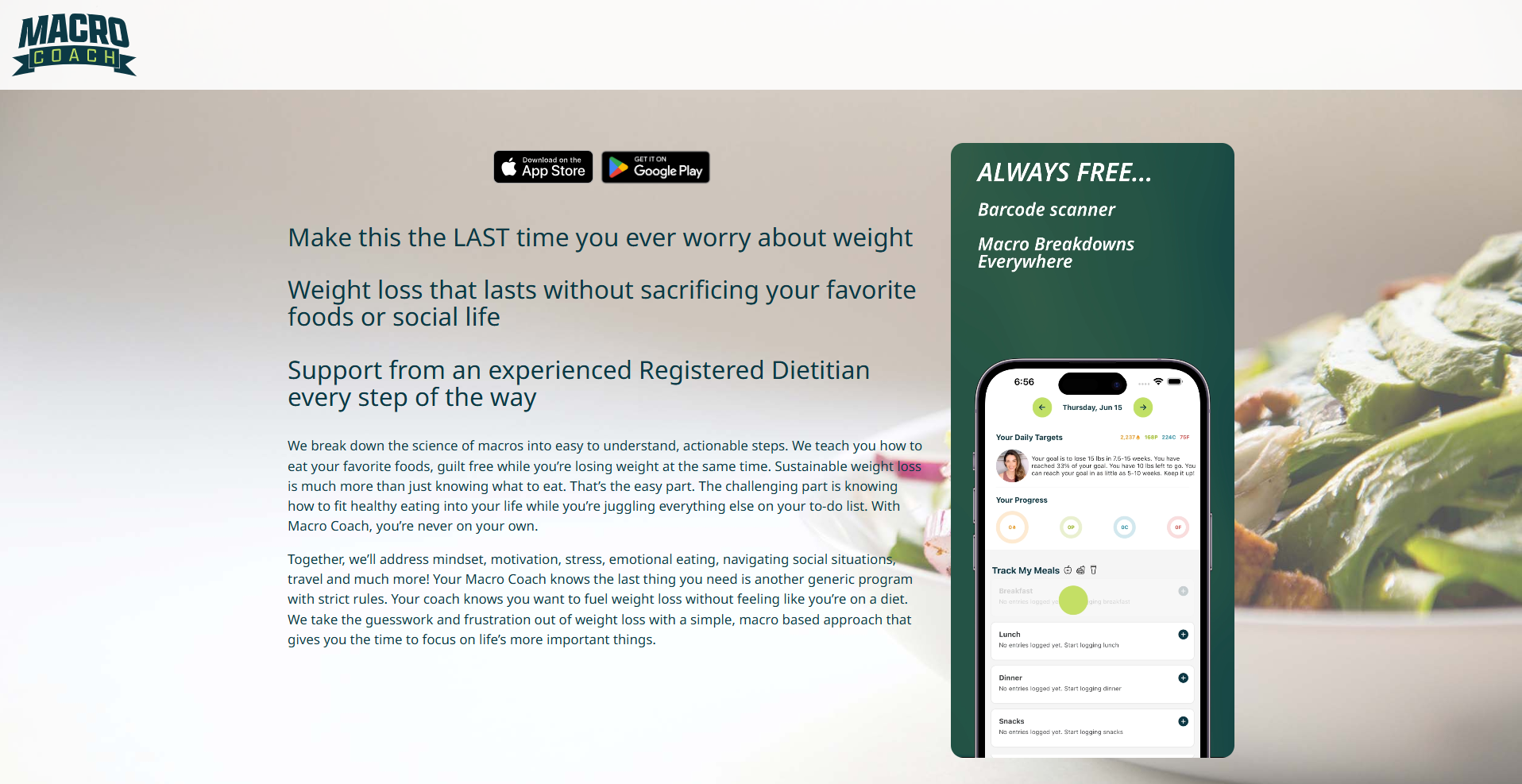
Best for: Trainers and nutrition coaches who specialize in body composition, want clients managing macros in real time, and deliver 1-to-1 or small group nutrition coaching.
MacroCoach is built for competitive physique prep and serious body composition work. The nutrition database is USA-based (heavily weighted to restaurant chains and packaged foods), so international coaches and those coaching whole-food athletes will find gaps.
You log a client’s intake, and the platform calculates macros instantly. Adjustments are templated (swap rice for oats, drop 50g carbs at breakfast) so clients do not have to re-log everything. The food search is fast and the barcode scanner (if your client has the app) works well.
No workout builder. No AI. You can paste a workout link from anywhere and the client sees it, but programming is a separate tool. Most trainers using MacroCoach also use Trainerize, Stronger, or Trainerfu for workouts, then bring nutrition data back manually.
Comparison table for MacroCoach:
| Feature | MacroCoach | Trainerfu (nutrition) | Stronger | Trainerize |
|---|---|---|---|---|
| Macro logging speed | 20-30 sec | 20-30 sec | N/A | N/A |
| Barcode scanner | Yes, accurate | No | N/A | N/A |
| Food database (US items) | 500k+ items | Limited | N/A | N/A |
| Workout integration | External link only | Native, full | Native | Native |
| AI meal suggestions | No | Yes | N/A | N/A |
| Real-time collab (coach sees) | Yes, live | Yes, live | N/A | N/A |
| Calorie cycling templates | Yes, 6 templates | Basic | N/A | N/A |
| Export for compliance | Yes, PDF | Yes, PDF | N/A | N/A |
| Price | From 39 | From 49 | N/A | N/A |
Pricing: 39 dollars per month, includes up to 10 clients. [Verified July 2026]
The honest take: MacroCoach does one thing well. If that one thing is your business, it is worth it. If you are trying to consolidate tools, it will add friction instead of removing it. MacroCoach has no AI features, which is appropriate for a nutrition-only tool, but it means you are still doing manual meal planning without AI suggestions.
6. TrueCoach: The Lean Alternative (Minimal but Stable)
Best for: Minimalists, coaches who work with a very specific niche (CrossFit, mobility, prehab), and teams that value stability over cutting-edge features.
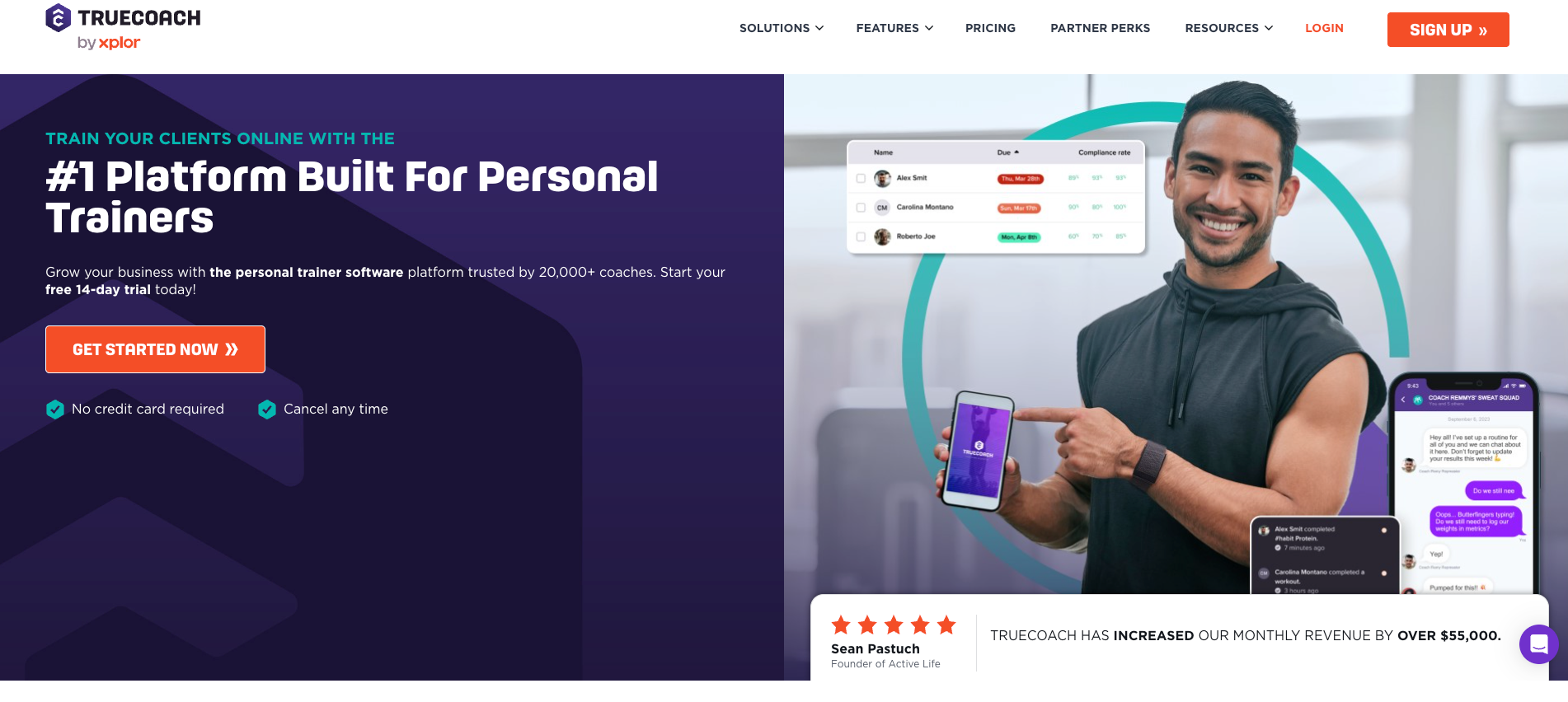
TrueCoach is intentionally minimal. The workout builder is simple (exercise, sets, reps, notes). The client app loads fast and is intuitive. The pricing has not changed in 4 years because there are no surprise feature drops or re-architectures.
If your entire business model is “here is your workout, log it, I check on you once a week,” TrueCoach is overkill-proof. No AI spam, no notifications you do not care about. The community of TrueCoach users is tight and there is a steady stream of small, stable updates.
The gap is obvious: you get what you see. No multi-week block generation, no volume analytics, no auto-regulation templates, no nutrition, no AI. As the market has moved toward AI-powered planning, TrueCoach has remained unchanged. This is intentional, but it means trainers scaling or wanting to leverage AI will need to look elsewhere.
Comparison table for TrueCoach:
| Feature | Trainerfu | TrueCoach | Trainerize |
|---|---|---|---|
| AI text-to-workout | Yes, 6-10 sec | No | No |
| Multi-week block generation | Yes, 1-click | No, manual only | No, manual only |
| Auto-regulation templates | Yes | No | No |
| Volume analytics | Yes, live | No | Manual math |
| Nutrition coaching | Yes, full suite | No | Optional add-on |
| Workout builder complexity | Advanced, AI-assisted | Simple: exercise, sets, reps, notes | Moderate |
| Client app load speed | Fast | Fast, minimal UI | Moderate |
| Pricing stability (feature drops/re-architectures) | Active development | Stable, unchanged 4+ years | Active development |
| Best fit | Solo/small teams wanting speed and breadth | Niche coaches (CrossFit, mobility, prehab) wanting stability | General fitness, in-person and online |
| Price per month | From 49 | 9.99-49.99, by client count | From 99 for this |
Pricing: 9.99 to 49.99 dollars per month, depending on client count. [Verified July 2026]
The honest take: TrueCoach is the adult choice if you do not need AI and prefer a tool that works the same way 12 months from now as it does today. But if you coach more than 15 clients, you will feel the friction of manual programming. It is not for ambitious coaches scaling. In 2026, the lack of AI features is a significant limitation for trainers who want to modernize their workflow.
7. My PT Hub: Unlimited Clients on a Flat Fee
Best for: Solo trainers and small coaching businesses who have outgrown per-client pricing and want workouts, nutrition, scheduling, and payments in one place without the bill climbing every time they sign someone new.
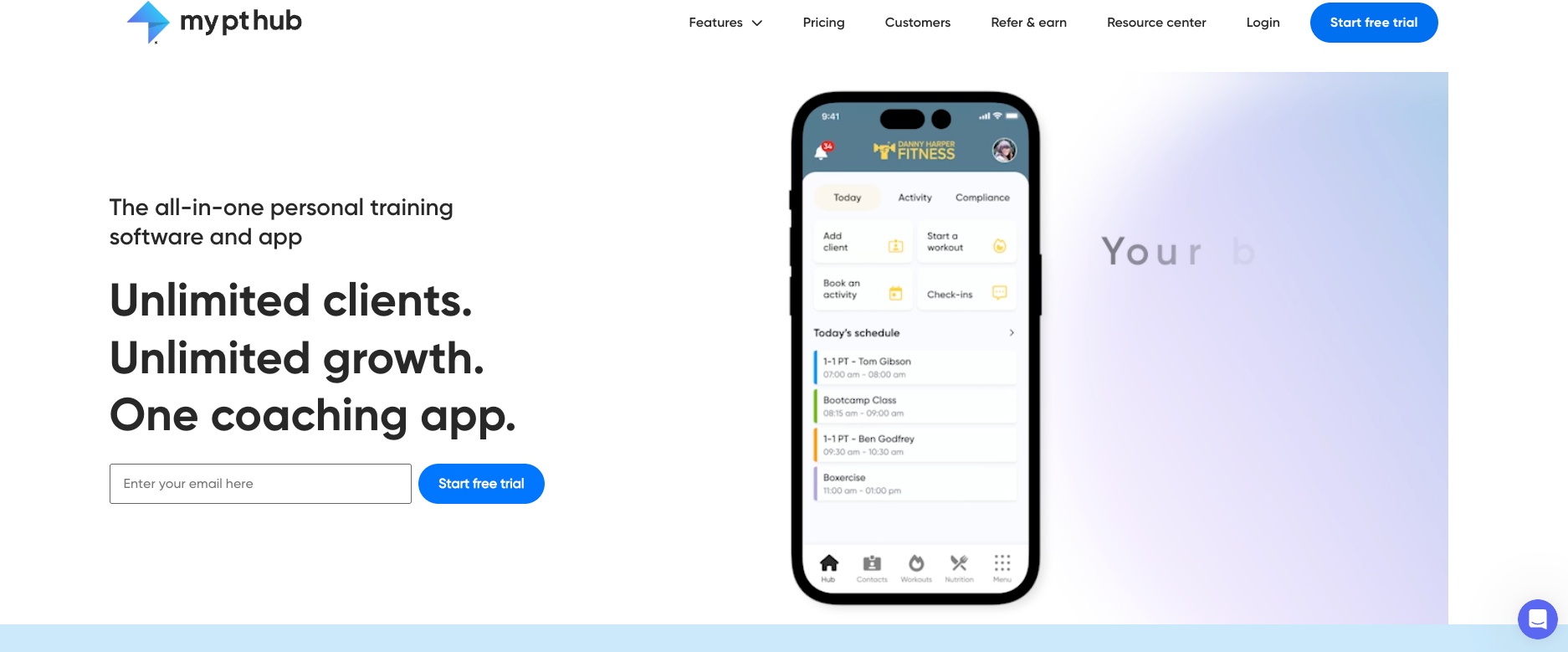
My PT Hub takes the opposite pricing approach from most of this list. Instead of charging per client or per tier of client count, its Premium plan gives you unlimited clients for a flat monthly fee. For a trainer scaling past 30 to 40 clients, that structure alone can be worth more than any single feature, since platforms like Trainerize start adding cost with every new signup.
The core feature set covers the same ground as Trainerize: a workout builder with templates, a nutrition planner with macro and food tracking, progress photos and assessments, in-app messaging, calendar bookings, and Stripe-based payment processing. Habit coaching and check-in automation are included, and a Check-Ins AI feature summarizes client check-ins so you are not reading every message in full to know how someone’s week went. This is the main AI feature My PT Hub offers in 2026.
The gaps show up in customization and polish. Reviewers consistently mention friction in programming specifics: drop sets, macro edits, and measurement formats are harder to adjust than they should be, and the exercise search has duplicate entries that slow down workout building. There is no AI text-to-workout or program-generation feature; everything is built manually or from templates. A branded client app is not included on the base plans; it is a separate one-time or monthly add-on, and Zapier integration is metered separately too.
Comparison table for My PT Hub:
| Feature | Trainerfu | My PT Hub | Trainerize |
|---|---|---|---|
| Unlimited clients on base tier | No, tiered by client count | Yes, on Premium | No, tiered by client count |
| AI text-to-workout | Yes, 6-10 sec | No | No |
| Auto volume adjustment | Yes, 1-click | Manual only | No |
| AI check-in summaries | Yes | Yes, Check-Ins AI (add-on cost) | No |
| Nutrition coaching | Yes, full suite, included | Yes, included | Optional add-on |
| Habit coaching | Yes, integrated | Yes, integrated | No |
| Branded client app | Yes, included on higher tiers | Add-on, one-time or monthly fee | Yes, one-time setup fee |
| Payment processing | No | Yes, via own Stripe account | Yes, Stripe |
| Entry price per month | 49 | Around 22-25 | From 99, or 9 for 1-2 client starter tier for this |
Pricing: Entry-level Starter plans run roughly 22 to 25 dollars a month for a handful of clients, depending on region and promotion. Premium, the plan most working trainers land on, runs from around 59 to 105 dollars a month depending on billing cycle and active promotions, and includes unlimited clients. Ultimate, which bundles the white-label app and extra trainer seats, runs from roughly 215 to 329 dollars a month. Published figures vary noticeably by source and currency, so confirm current pricing on My PT Hub’s own site before quoting it to a client or in copy. [Checked July 2026]
The honest take: My PT Hub earns its place on a “cheaper than Trainerize” list for one reason: the unlimited-client flat fee, which genuinely pays for itself once you cross 30 to 40 clients. It is a legitimate all-in-one option for a solo trainer who wants workouts, nutrition, and payments under one login without per-client anxiety. What it does not offer is comprehensive AI features. The Check-Ins AI is helpful but limited. If you want AI-powered program generation and text-to-workout capabilities, this is not the platform. If you want unlimited scaling at a fixed price, it is excellent.
Another thing to think about is efficiency. An efficient user interface makes it fast for you to complete your tasks. A simple interface can be non-efficient if it takes too many clicks to get the job done.
Trainerfu combines simplicity and efficiency, making the user experience intuitive and enjoyable. This is key for streamlining your business and saving you time and effort. The platform was designed with personal trainers’ workflows in mind, reducing the number of clicks needed to complete common tasks.
Frequently Asked Questions
What is the real total cost once you add all features
For comparison purposes, here is the true all-in monthly cost for a trainer with 30 clients using each platform:
PT Distinction: 59.90 dollars per month (nutrition and automation included, no payment processing add-on).
Trainerfu: 49 dollars per month (all features included: nutrition, automation, habit coaching, white-label app on higher tiers, AI text-to-workout, program analysis).
TrueCoach: 63.99 dollars per month (no add-ons; no nutrition or automation).
My PT Hub: 59 to 105 dollars per month depending on plan (Premium unlimited). All features included.
Trainerize: 70 dollars for 30 clients plus 7 dollars for payment processing, plus 20 to 45 dollars if you want nutrition equals 97 to 122 dollars total.
Everfit: 49 dollars base plus 33 dollars nutrition plus 24 to 29 dollars automation plus 8 to 9 dollars payments equals 114 to 121 dollars total.
TrainHeroic: 44.99 dollars per month for 25 clients (payment and automation free).
FitSW: 49 dollars per month (all features included).
When you add up the real bill, Trainerfu and FitSW are the cheapest all-in. Trainerize becomes expensive once you add nutrition. My PT Hub is cheapest if you have 40+ clients due to unlimited scaling.
How long does migration actually take
Expect 4 to 6 weeks if you have 20+ active clients. You will export your client data (names, contact, injury history), recreate your key programs on the new platform, and run both systems in parallel for 2 weeks while your clients adjust. Most platforms have import templates. Trainerfu, Stronger, and Everfit all have onboarding support. Plan for 10 to 15 hours of your time, not 40.
What if I need multi-sport coaching (strength plus cardio plus mobility)
Trainerfu and Trainerize are the only two that handle it natively in one app. Stronger is strength-only. Everfit is workout-only. If you coach a runner who also lifts, or a soccer player building strength in the off-season, you need Trainerfu or stick with Trainerize but reduce your usage to the fitness component.
Is AI-generated programming actually good for my clients
AI is good at two things: speed and consistency. A 12-week block that would take you 3 hours to manually design, Trainerfu builds in 90 seconds, and it respects basic periodisation and volume progression rules. Is it as individualised as your hand-written program. Not quite. But it is 40 times faster and 90% as good, so you pick the trade-off. If you have 20 clients, that trade-off wins. The AI in Trainerfu, Everfit, and Stronger can generate programs that are 80 to 90% customized based on your prompts and client data.
Can I use multiple platforms at once (workouts in Stronger, nutrition in MacroCoach, communication in CoachNow)
Yes, many do. The friction point is updating the client if one platform goes down or if you need to migrate data. For solo trainers with 10 to 20 clients, it is manageable. For teams or 50+ clients, the cognitive overhead grows. Stick to one primary platform (Trainerfu, Trainerize, or Stronger) and add specialist tools only if they solve a real gap.
When should I actually switch platforms
Switch when your current platform is (a) costing you 3+ hours per week in friction, (b) missing a core feature you need for your niche, or (c) no longer being actively developed. Trainerize still gets updates, so “no longer being developed” is not yet true. But switching is worth it if you are coaching 15+ clients and spending 5+ hours per week on programming. If the new platform has AI text-to-workout and auto-regulation, the payback is even faster (2 to 3 weeks instead of a month).
How does AI-generated programming actually work in these platforms
In Trainerfu and Everfit, you describe what your client needs (e.g., “12-week hypertrophy block, focus on compound movements, no knee pain”) and the AI generates a complete periodised program in 90 seconds. You can then auto-adjust volume across all weeks with one click, or manually edit individual workouts. The AI respects your coaching cues and integrates client data (age, experience, injury history) into the generated plan. This is different from a chatbot answering questions. It is a production-ready plan that respects training science.
What if I like Trainerize but think it is overpriced
Trainerize’s current pricing tier is 99 to 199 dollars per month depending on your client count and whether you add integrations. Stronger starts at 19.99, Trainerfu at 49, and FitSW at 49, so cost is a real factor. If price is the barrier, FitSW or Stronger is the closest match: straightforward pricing, stable platform, and genuinely cheaper. That said, if you are paying 99 dollars for Trainerize but your time is worth 30 dollars per hour, then a software that saves you 3 hours per week generates 4,680 dollars per year in reclaimed time. Price is not the real number; hours reclaimed is. Trainerfu and Everfit will reclaim more hours due to AI speed.